

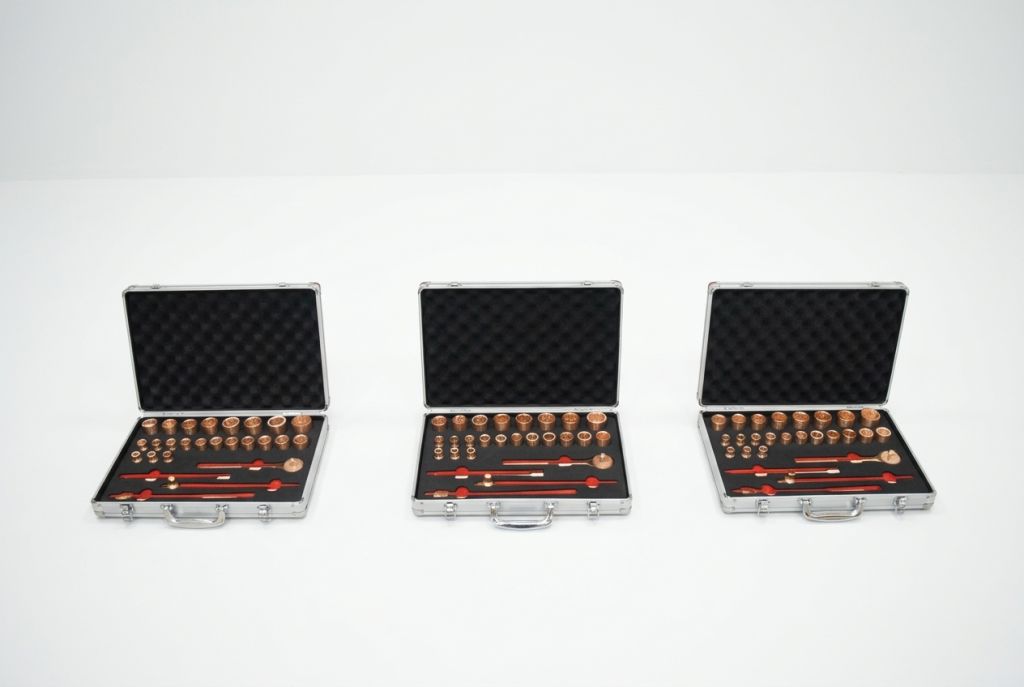
Non-sparking tools are used in certain aeronautical operations to reduce the risk of ignition in the presence of flammable fuels, gases, vapours or residues.
A conventional steel tool can produce sparks due to impact or friction. Those made of copper-beryllium or aluminium-bronze generate sparks with lower thermal energy. However, "non-sparking" does not mean zero risk: they must be used after assessing the environment and in conjunction with ventilation, cleaning, atmospheric control and electrostatic discharge prevention measures.
Why choose copper-beryllium?
Copper-beryllium combines hardness, mechanical strength, corrosion resistance, and non-magnetic properties. These characteristics make it possible to manufacture tools suitable for technically demanding operations.
They should not be ground, machined, welded, or polished without proper controls, as these processes can generate dust or fumes containing beryllium. During normal manual use, exposure is very low if the manufacturer's instructions are followed.
From product to solution
To access the aeronautical sector, a supplier must know the application, identify the risks and select the appropriate alloy. Customized kits include only the necessary tools and improve their organization, transport and control.
In this way, the supplier stops competing only on price and provides an adapted technical solution.
Frequently Asked Questions
Do non-sparking tools completely eliminate the risk?
They reduce the risk of ignition, but they do not replace other preventive measures.
Where are they used?
In operations close to flammable fuels, tanks, vapours or waste, according to the risk assessment.
Copper-beryllium or aluminum-bronze?
Copper-beryllium generally offers greater hardness and mechanical strength. The choice depends on the stress, the environment and the application.
How do I set up a kit?
By analysing the task, the place of use, the substances present and the necessary services.