

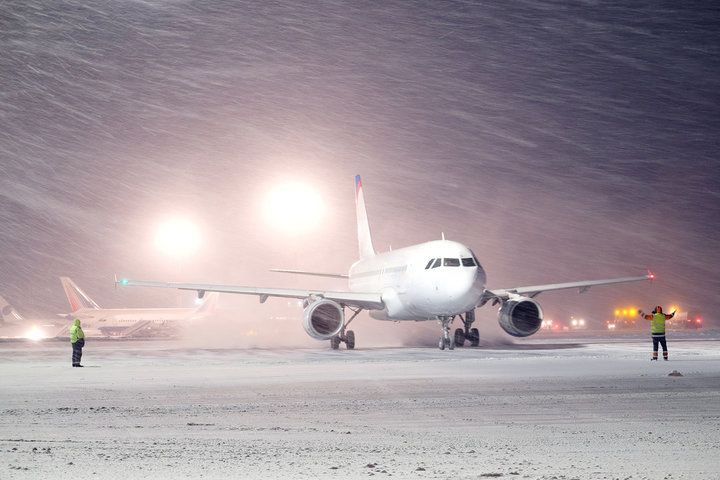
AOG (Aircraft on Ground) interventions are, by nature, critical operations: they require acting quickly, accurately and usually with limited resources. When these situations unfold under extreme climates—intense cold, snow, scorching heat, or storms—the technical and human complexity increases exponentially.
In this article, we look at the top challenges faced by AOG equipment and how to mitigate them to ensure safety, efficiency, and operational continuity.
Impact of Extreme Conditions on Aircraft Materials and Systems
Extreme Cold and Snow
Low temperatures directly affect materials and operational performance:
- Shrinkage of materials, altering tolerances, adjustments, and mechanical joints.
- Icing on gates, surfaces, connectors or sensors, making inspections difficult and causing failures.
- Increased viscosity in fluids such as oil, hydraulics or fuel, slowing down tests and start-ups.
Extreme Heat
High temperatures also pose serious operational risks:
- Dilation and slight deformations of components.
- Accelerated degradation of electronic systems and risk of overheating.
- Lower efficiency in power tools and auxiliary equipment.
Effect of Weather on AOG Tools and Equipment
AOG kits must be portable, complete and prepared for quick interventions on the track. However, under extreme conditions adverse effects arise:
- Metal tools lose grip, become brittle, or extremely cold to the touch.
- Batteries reduce their performance in the cold.
- Humidity and snow increase the risk of FOD (Foreign Object Damage) if there is no efficient control and traceability system.
Physical Limitations of the Operator in Extreme Environments
Sub-zero temperatures
- Loss of fine dexterity from wearing thick gloves and numb fingers.
- Risk of freezing, especially when handling metal tools.
- Premature fatigue and reduced precision in delicate tasks.
Intense Heat
- Risk of dehydration or heat stroke.
- Increased errors due to heat stress and decreased concentration.
Reduced Visibility and Poor Lighting
During night operations, storms, or heavy rainfall, visibility can be severely compromised:
- Difficulty detecting leaks, cracks, corrosion, or wear.
- Shadows that generate false positives in inspections.
- Increased likelihood of forgetting tools, increasing the risk of FOD.
Logistical Hurdles in an AOG Operation
The logistical factor becomes a key challenge:
- Complex access to the aircraft due to snow, wind, or slippery surfaces.
- Delays in the supply of critical spare parts.
- Failures or limitations in diagnostic equipment and electrical power.
Operational Security at Risk
Extreme weather significantly increases the likelihood of incidents:
- Falls and slips on wet or icy surfaces.
- Malfunction of the GSE (Ground Support Equipment) such as ladders or platforms.
- Interference caused by hail, wind, heavy rain, or electric shock.
More Demanding Procedures and Higher Inspection Load
To mitigate risks, studies recommend:
- More frequent and detailed inspections in exposed areas.
- Application of anti-corrosion treatments.
- Adaptation of procedures to weather conditions.
- Design of specific contingency plans.
These recommendations fit with EGA Master's philosophy in terms of traceability, tool control and FOD prevention.
Preparation, Technology and Procedures to Ensure AOG Safety
AOG operators working under extreme weather conditions must balance speed, safety and precision, facing an environment where aircraft, tools and the human body itself operate at the limit.
The key to fast, safe and effective intervention lies in:
- AOG kits are specially designed for extreme climates.
- Certified, non-slip and ergonomic tool.
- Control systems and anti-FOD foam.
- Portable professional lighting equipment.
- Procedures adapted to cold, heat, rain or snow.
With the right combination of technology, equipment, and training, it is possible to minimize risks and maintain operational continuity even in the most adverse scenarios.