

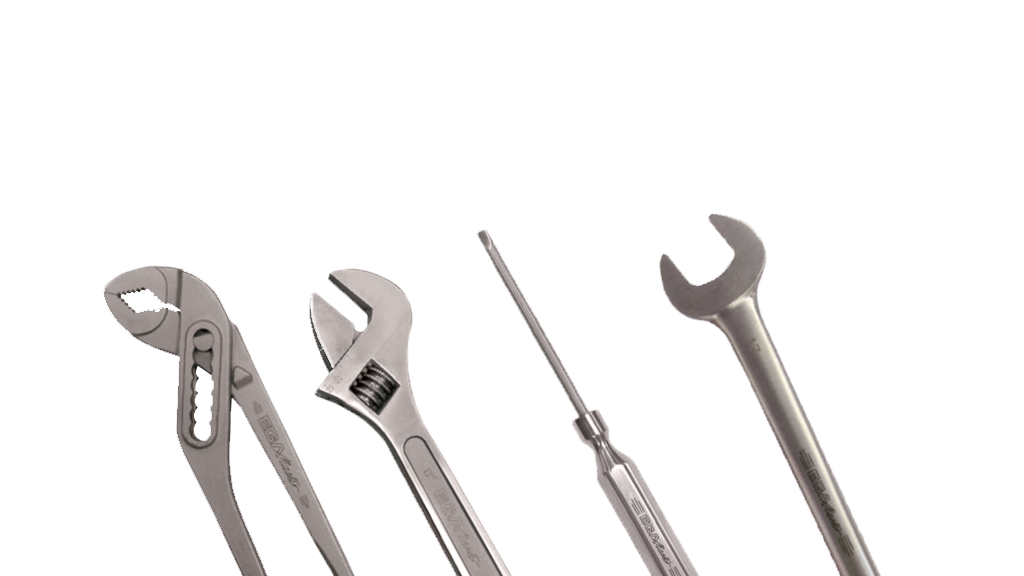
The challenge: real-world performance and durability
In industrial environments, the choice of stainless steel is not only a matter of material, but of operation, safety and durability.
The tools are exposed to:
- humidity
- Chemical Agents
- Sterilization Cycles
- Continuous mechanical stresses
Without correct selection, the result is clear: corrosion, premature wear or loss of performance.
Types of stainless steel and their application in the field
INOX 420: maximum mechanical performance
420 stainless steel stands out for its high hardness and resistance to wear, which makes it ideal for jobs with high mechanical demand.
However, it is more sensitive to corrosion, especially in humid environments or with chemical agents.
Recommended Use: Demanding operations with low sterilization frequency.
INOX 304: standard and versatile solution
Stainless 304 offers good corrosion resistance in general environments, being the most commonly used in standard maintenance.
Recommended use: general tasks in non-aggressive conditions.
INOX 316: maximum protection in critical environments
Stainless 316 is the choice for extreme conditions, thanks to its high resistance to corrosion against salt, chemicals or humid environments.
Recommended use: pharma, offshore, nuclear or MRO industry.
Maintenance: the critical factor that extends service life
The resistance of stainless steel depends directly on its cleanliness. Without a proper protocol, even high-quality materials can degrade quickly.
Essential good practices
- Use mild water and detergents
- Avoid chlorinated or abrasive products
- Dry immediately after each cleaning
- Store in dry environments
In addition, autoclaving should be performed according to the type of steel, as improper use can lead to loss of properties or corrosion.
Choosing well is trading better
Selecting the right stainless steel and applying rigorous maintenance allows:
- Increase tool life
- Reduce operational failures
- Improve operator safety
In demanding environments, the difference isn't just in the tool...
It's in the technical decision behind its use.